GuideFarm Business
Working out your cost of production per hectare and per ton
If you do not know what it costs you to grow a ton of grain, you cannot know whether a price is good. This guide walks through variable and fixed costs, gross margin, and break-even price and yield with a worked example.

Every season, farmers face the same question: is this price good enough to sell at? The answer depends entirely on what the crop cost to produce. Knowing your cost of production per hectare and per ton turns a gut feeling into a clear number. It also shows which costs matter most and where savings or better yields would make the biggest difference.
Two kinds of cost
Variable costs
Variable costs rise and fall with how much you plant. If you do not plant a hectare, you do not spend them. For a grain crop they typically include:
- Seed.
- Fertiliser and lime (lime is often spread over the years it lasts).
- Herbicides, insecticides and fungicides.
- Fuel, lubricants and machinery repairs.
- Contractors hired for planting, spraying or harvesting.
- Casual and seasonal labour.
- Crop insurance.
- Interest on production credit.
- Bags, transport, handling, storage and marketing costs.
Fixed costs
Fixed costs, also called overheads, stay much the same whatever you plant. They include permanent labour, depreciation on machinery and buildings, interest on long-term loans, land rent or bond payments, rates, insurance on assets, office costs, vehicle costs and the owner's own salary. To get a full cost per hectare, share fixed costs across all the hectares and enterprises on the farm.
Gross margin
Gross margin = gross income − variable costs. It tells you what each hectare of an enterprise contributes towards fixed costs and profit. It is the best figure for comparing enterprises on the same farm, such as maize against soybeans, because it leaves out the overheads you would carry either way.
A worked example
The figures below use round numbers in a generic currency unit so the method is clear. Replace them with your own costs and prices.
| Item | Per hectare |
|---|---|
| Seed | 2 000 |
| Fertiliser and lime | 4 500 |
| Crop protection chemicals | 1 500 |
| Fuel, repairs and contractors | 2 500 |
| Labour (casual) | 600 |
| Insurance, interest and marketing | 900 |
| Total variable costs | 12 000 |
| Share of fixed costs | 3 000 |
| Total cost | 15 000 |
Suppose the field yields 5 tons per hectare and the price you can get, after transport and deductions, is 3 600 per ton.
- Gross income = 5 × 3 600 = 18 000 per hectare.
- Gross margin = 18 000 − 12 000 = 6 000 per hectare.
- Profit after fixed costs = 18 000 − 15 000 = 3 000 per hectare.
Cost per ton and break-even price
Cost per ton = total cost per hectare ÷ yield per hectare. In the example, 15 000 ÷ 5 = 3 000 per ton. That is your break-even price: sell below it and you lose money on that crop, sell above it and you make a profit. Knowing this number before harvest lets you judge offers, decide whether to store and sell later, or whether a forward contract at a given price covers your costs.
Break-even yield
Break-even yield = total cost per hectare ÷ expected price per ton. At 3 600 per ton, you need 15 000 ÷ 3 600 = about 4.2 tons per hectare to cover all costs, and 12 000 ÷ 3 600 = about 3.3 tons to cover variable costs. If your realistic yield in a normal season is below this, the input plan or the enterprise needs rethinking.
| Yield (t/ha) | Cost per ton |
|---|---|
| 3 | 5 000 |
| 4 | 3 750 |
| 5 | 3 000 |
| 6 | 2 500 |
The table shows why yield matters so much. Many costs per hectare are the same whether the crop does well or poorly, so a higher yield spreads them over more tons. Cutting an input that reduces yield often raises the cost per ton instead of lowering it.
Where to look for savings
- Fertiliser matched to a soil test rather than applied by habit.
- A sprayer calibrated so product is not over- or under-applied.
- The right plant population for your rainfall, so seed is not wasted.
- Machinery costs per hectare: contracting may be cheaper than owning for small areas.
- Buying inputs early or in groups for better prices, without tying up cash too long.
- Reducing post-harvest losses, which are costs you already paid for but never sell.
Key points
- Separate variable costs from fixed costs, and include non-cash costs.
- Gross margin compares enterprises; full cost per ton shows real profit.
- Break-even price = total cost per hectare ÷ yield.
- Break-even yield = total cost per hectare ÷ price.
- Higher yield usually lowers cost per ton more than cutting inputs does.
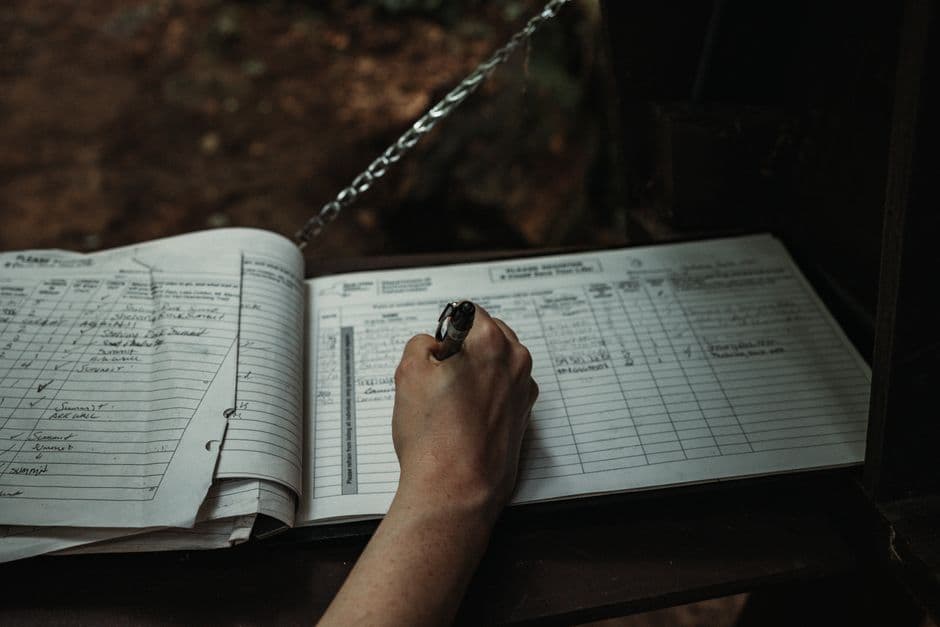
- Base the figures on your own records, and update them each season.
This guide gives general information. Conditions differ from farm to farm, so confirm recommendations with your local extension officer, agronomist or veterinarian, and always follow the registered product label.