GuideLivestock
Income over feed cost: does your ration still pay?
Feed is usually the biggest cost in a dairy or feedlot. Income over feed cost shows, per animal per day, what is left of the milk or meat price once the ration is paid for. Here is how to work it out, read it and act on it.
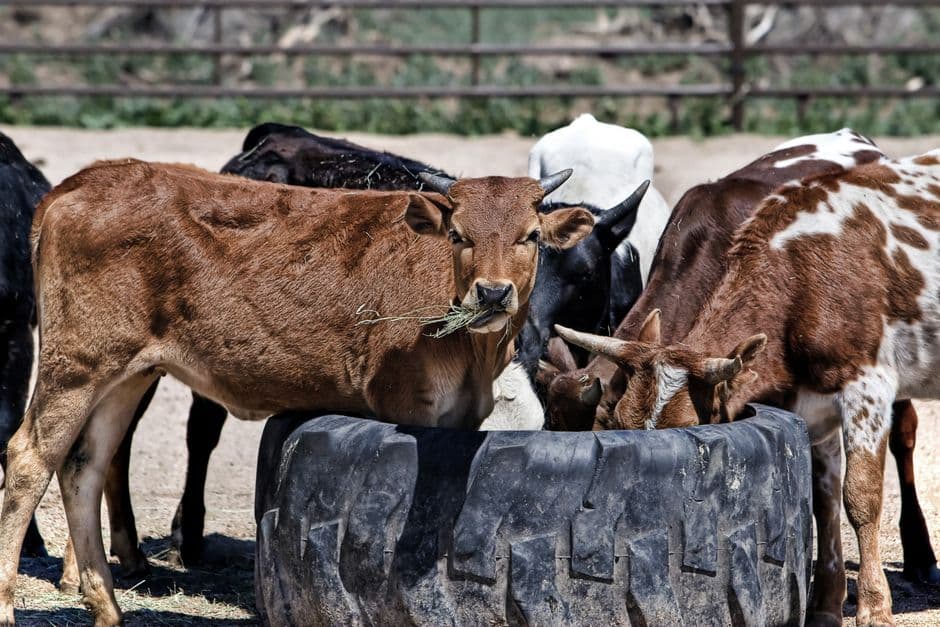
In most dairies and feedlots, feed is the single largest bill, and it moves every time maize, protein meal or hay changes price. The milk price and the cattle price move too, but not at the same time or by the same amount. A ration that paid well six months ago can quietly stop paying. Income over feed cost, usually shortened to IOFC, is the simplest way to check. It asks one question: after paying for what an animal eats today, how much of what it produces today is left?
What IOFC measures, and what it leaves out
For a dairy cow, IOFC is the value of the milk she gives in a day minus the cost of the feed she eats that day. For a growing or feedlot animal, it is the value of the live mass she puts on in a day minus the cost of that day's feed.
It deliberately leaves out everything else: labour, vet and medicine, electricity, fuel, repairs, interest, depreciation and, for beef, the price you paid for the animal. That is its strength and its limit. Because it only uses numbers you can check every week, you can track it closely. But a positive IOFC is not profit. It is the money available to pay all those other costs, and whatever is left after them is profit.
Working it out
Step 1: cost the ration
List every feed that goes into the animal in a day: silage, hay, grazing supplements, concentrate, licks, by-products. For each, multiply the kilograms fed per animal per day by the price per kilogram. Feed is usually bought per ton, so divide the ton price by 1 000 first. Add them up to get the feed cost per animal per day.
- Use kilograms as fed, the wet weight that goes into the trough, because that is how you buy and weigh feed.
- Use the price delivered to the farm, including transport.
- Weigh what is actually fed over a few days and subtract what the animals leave behind. The ration sheet says what should be fed; the scale says what is.
- For feed you grow yourself, such as silage or hay, use what it would cost to buy in or what you could sell it for. It is not free just because no invoice arrives.
Step 2: value what the animal produces
For milk, multiply the average litres per cow per day by the price your buyer actually pays after deductions and bonuses. Use the herd or group average from the bulk tank or milk recording, not your best cow.
For beef, multiply the average daily gain in kilograms by the live price per kilogram you expect when the animals are sold. Average daily gain is best measured by weighing the same group twice, a few weeks apart, and dividing the gain by the number of days.
Step 3: subtract
Income minus feed cost is IOFC per animal per day. Multiply by the number of animals for the herd, and by 30 for a month.
| Dairy cow | Feedlot steer | |
|---|---|---|
| Ration cost per day | R78.20 | R38.75 |
| Produces per day | 22 L at R7.50/L | 1.6 kg gain at R40/kg live |
| Income per day | R165.00 | R64.00 |
| IOFC per day | R86.80 | R25.25 |
Two ratios worth watching
In a dairy, divide the feed cost by the litres produced to get feed cost per litre. Compare it with the milk price: the gap between them is your IOFC per litre. Also look at feed cost as a share of milk income. If that share creeps up month after month, the ration, the milk price or the cows' production is moving against you, and it is worth finding out which.
In a feedlot or on a growing ration, divide the feed cost per day by the average daily gain to get feed cost per kilogram of gain. This is the number to compare with the live price. While it stays below the price you will be paid per kilogram, each extra kilogram pays for its feed. Once it rises above that price, every kilogram you add costs more to put on than it is worth.
When the number turns against you
A falling IOFC has three possible causes: feed got dearer, the product price fell, or the animals are producing less on the same ration. Your records will usually show which. Common responses include:
- Re-price the ration. Swap a feed for a cheaper one that supplies the same energy and protein, with advice from a nutritionist so production does not drop further.
- Cut waste. Spoiled silage, feed trampled into mud and troughs refilled before they are cleaned out all cost money without feeding anything.
- Group animals by need. Late-lactation cows or slower-gaining animals often do not need the most expensive ration.
- Check water, health and heat stress. Animals that drink too little, carry parasites or stand in the heat eat less and produce less, which lowers income without lowering the feed bill much.
- In a feedlot, look at how long animals stay on feed. Gains slow as animals finish, so feed cost per kilogram of gain tends to rise towards the end.
- Cull or sell animals that consistently produce too little to cover their feed.
Be careful about cutting feed simply to save money. A cheaper ration that drops milk or gain by more than it saves makes IOFC worse, not better. The test of any change is whether IOFC goes up, not whether the feed bill goes down.
Make it a habit
IOFC is most useful as a trend. Work it out whenever a feed price, the milk price or the cattle price changes, and at least once a month. Keep the figures with your farm records to see, over a season, which rations and groups paid.
Key points
- IOFC = what the animal produces in a day minus what it eats in a day.
- Use kg as fed, delivered prices and measured intake, not the ration sheet.
- It is not profit: all other costs still come out of it.
- Watch feed cost per litre in a dairy and feed cost per kg of gain in a feedlot.
- Judge any ration change by whether IOFC rises, not by whether the feed bill falls.
This guide gives general information. Conditions differ from farm to farm, so confirm recommendations with your local extension officer, agronomist or veterinarian, and always follow the registered product label.