GuideCrops
Growing degree days explained: timing your crop by heat, not the calendar
Crops develop according to the heat they accumulate, not the number of days since planting. Growing degree days turn daily temperatures into a heat count you can use to compare hybrids, plan planting dates and predict flowering.
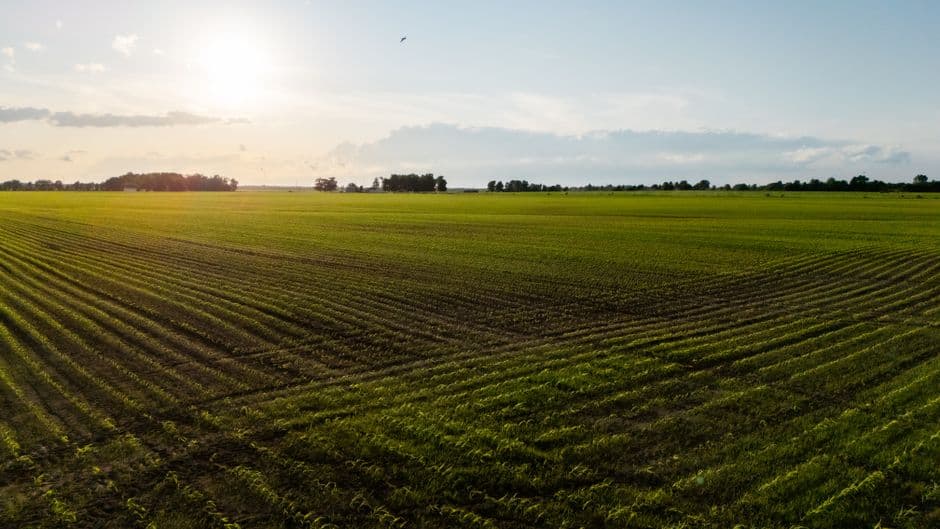
Ask two farmers how long a maize hybrid takes to mature and you may get two very different answers. One farming in a warm lowland may harvest weeks before one on a cool highland plateau, even with the same seed planted on the same day. The reason is temperature. Plants develop faster when it is warm and slower when it is cool. Growing degree days, often shortened to GDD or called heat units, are a simple way to measure that.
The basic idea
Each crop has a base temperature below which it hardly develops. For maize and sorghum the base commonly used is 10 °C. For wheat, barley and many cool-season crops it is lower, often 0 to 5 °C. Every day, the crop gains heat units equal to how far the average temperature is above that base.
The standard daily calculation is: GDD = (maximum temperature + minimum temperature) ÷ 2 − base temperature. If the result is negative, the day counts as zero; a crop does not go backwards on a cold day.
Upper and lower limits for maize
Maize development does not keep speeding up in extreme heat, so a common method caps the maximum temperature at 30 °C and raises any minimum below 10 °C up to 10 °C before averaging. This stops a very hot afternoon or a cold night from distorting the count.
Example: a day with a maximum of 32 °C and a minimum of 14 °C. Cap the maximum to 30 °C. Average = (30 + 14) ÷ 2 = 22 °C. GDD = 22 − 10 = 12 heat units for that day.
| Day | Max °C | Min °C | Adjusted max / min | GDD |
|---|---|---|---|---|
| 1 | 28 | 15 | 28 / 15 | 11.5 |
| 2 | 32 | 14 | 30 / 14 | 12.0 |
| 3 | 24 | 8 | 24 / 10 | 7.0 |
| 4 | 35 | 19 | 30 / 19 | 14.5 |
Add the daily values from planting onwards to get the accumulated GDD. Over those four days the crop gained 45 heat units.
Why farmers use it
Comparing hybrids fairly
Seed companies often describe maturity by heat units rather than days, because days are only meaningful in one climate. A hybrid described as needing more heat units to reach physiological maturity is a longer-season hybrid. Maize hybrids need roughly 1 200–1 700 GDD (°C) to physiological maturity depending on hybrid maturity class; check the seed company's figure (base 10 °C, from planting). Figures differ between companies and calculation methods, so only compare numbers from the same source.
Choosing a planting window
If you know how many heat units a hybrid needs and roughly how many your area accumulates each month, you can check whether it will mature before the first frost in cool highland areas, or before the rains end in areas with a short season. This is especially useful on high-altitude farms in Southern and East Africa, where a long-season hybrid planted late can be caught by cold weather before it dries down.
Predicting growth stages
Flowering (tasselling and silking in maize) usually arrives at a fairly consistent heat unit total for a given hybrid, a bit over half of what it needs to reach maturity. Knowing when flowering will fall lets you plan scouting, time top-dressing, and judge whether a forecast heatwave or dry spell is likely to hit the most sensitive stage.
Getting temperatures
The count is only as good as the temperatures you feed it. Options, from best to simplest:
- A maximum-minimum thermometer or small weather station on the farm, read at the same time every day and placed in shade about 1.5 m above short grass.
- The nearest official weather station, if it has similar altitude and is not too far away.
- Gridded or satellite-based weather data, which is available for most of Africa and is what the growing degree days calculator on this site uses.
Limits to keep in mind
- GDD tracks development, not yield. A crop can reach maturity on schedule but yield poorly because of drought, poor nutrition or disease.
- Water stress can delay silking relative to tasselling in maize, so stages may drift from the heat-unit prediction in dry years.
- Day length also affects some crops, such as certain sorghum, soybean and rice varieties, so heat units alone may not predict their flowering.
- Different sources use different base temperatures and caps. Always use the same method as the source of the heat unit rating you are comparing against.
Key points
- Daily GDD = average of max and min temperature minus the crop's base temperature, never below zero.
- For maize, cap the maximum at 30 °C and raise the minimum to 10 °C before averaging.
- Use heat units to compare hybrid maturity, choose planting dates and predict flowering.
- Use temperatures from a station at a similar altitude, and confirm hybrid heat unit ratings with your seed supplier.
This guide gives general information. Conditions differ from farm to farm, so confirm recommendations with your local extension officer, agronomist or veterinarian, and always follow the registered product label.