GuideFarm Business
Knowing what each kilometre costs your farm vehicles
The fuel slip is only part of what a bakkie or truck costs. Here is how to add tyres, maintenance, licences, insurance, depreciation and interest into one cost per kilometre, and how to use that number to price transport, compare options and cut waste.
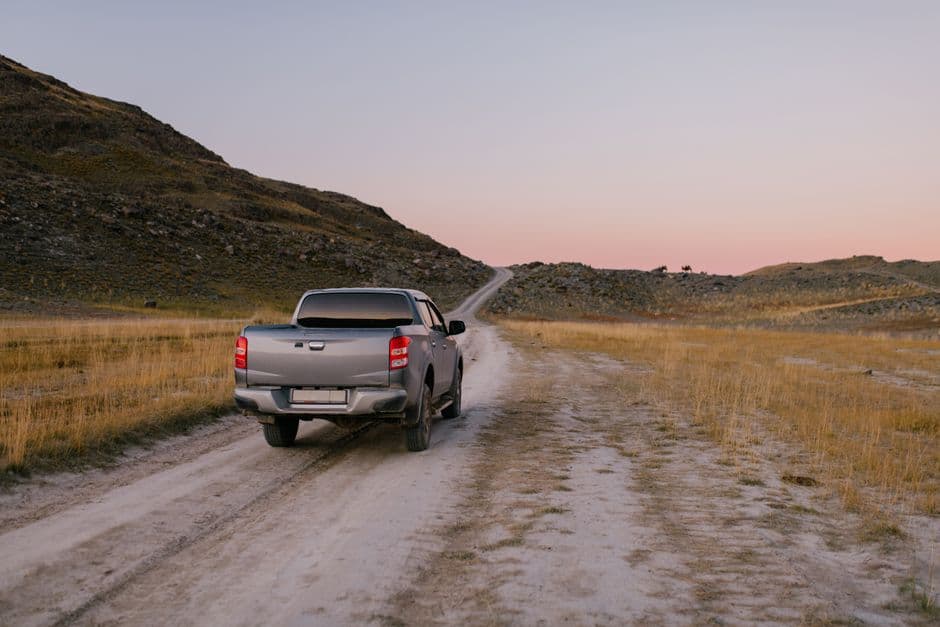
Ask most farmers what their bakkie costs to run and the answer is the diesel bill. Fuel is the cost you see every week, so it feels like the whole story. But a vehicle also wears out tyres, needs services and repairs, has to be licensed and insured, loses value every year and, if it was financed, carries interest. Put all of that together and divide by the kilometres driven, and you have one honest figure: what each kilometre really costs the farm.
That figure answers practical questions. Is it cheaper to deliver your own grain or pay a transporter? What should you charge a neighbour for a load? Is the old truck still worth keeping? Which vehicle should do the long trips? Without it, those decisions are guesses.
Running costs and fixed costs
Vehicle costs fall into two groups, and keeping them apart is the key to using the number well.
- Running costs rise with every kilometre: fuel, tyres, and maintenance and repairs. Drive twice as far and you roughly double them.
- Fixed costs are paid whether the vehicle moves or not: licence, insurance, tracking, depreciation, interest and, where the vehicle has its own driver, wages.
Because fixed costs are spread over the kilometres you drive, a vehicle that stands in the shed most of the year has a high cost per kilometre even if it burns little fuel.
Working out each part
Fuel
Measure consumption yourself rather than trusting the brochure, because loaded farm work on gravel uses more. Fill the tank to the brim, zero the trip meter, work as usual, then fill to the brim again. Litres in the second fill divided by kilometres driven, times 100, gives litres per 100 km. Multiply litres per kilometre by what you actually pay per litre, after any diesel rebate you claim back.
Tyres
Divide the cost of a full set by the kilometres a set lasts on your roads. Use what your last set actually delivered, not the manufacturer's rating; corrugated gravel, thorns and heavy loads shorten tyre life a great deal.
Maintenance and repairs
Add up services, parts, labour and breakdowns for the year. One big repair can distort a single year, so an average of two or three years is more useful.
Depreciation and interest
Depreciation is the value the vehicle loses while you own it: purchase price minus what you expect to get when you sell or trade it in, divided by the years you will keep it. Interest is the finance charge on the loan, not the full instalment, because the capital part of the instalment is already covered by depreciation. If you paid cash, the money tied up in the vehicle could have earned interest elsewhere, and it is fair to count that too.
A worked example
| Cost | Per year | Per km |
|---|---|---|
| Fuel: 11 L/100 km at an example R22/L | R72 600 | R2.42 |
| Tyres: R12 000 a set lasting 60 000 km | R6 000 | R0.20 |
| Maintenance and repairs | R15 000 | R0.50 |
| Running costs | R93 600 | R3.12 |
| Licence, insurance and tracking | R21 900 | R0.73 |
| Depreciation: (R600 000 − R300 000) ÷ 5 years | R60 000 | R2.00 |
| Interest | R30 000 | R1.00 |
| Fixed costs | R111 900 | R3.73 |
| Total | R205 500 | R6.85 |
In this example fuel is only about a third of the total. Depreciation and interest together cost more than the fuel does per kilometre. If the same bakkie drove only 15 000 km a year, its fixed costs would double to R7.46 per kilometre, and the total would rise sharply even though nothing else changed.
Using the number
- Own transport or hire: compare your cost per kilometre, or per ton-kilometre for loads, with a transporter's rate. Remember that a transporter's quote includes their driver and their fixed costs.
- Charging for a load: your cost per kilometre, times the distance there and back, is the least you should ask a neighbour for a trip.
- Choosing which vehicle goes: send the vehicle with the lowest running cost on long trips; its fixed costs are paid anyway.
- Replace or keep: an older vehicle often has low depreciation but rising repairs. When repairs per kilometre climb past what depreciation and interest on a replacement would cost, it is time to look at the numbers seriously.
- Costing an enterprise: charge each crop or livestock enterprise for the kilometres it uses, so its gross margin reflects its real transport cost.
Cutting the cost per kilometre
Fuel is usually the easiest place to start, because small changes in driving and upkeep add up over a year. Using even 5% less fuel for the same work is worth a noticeable sum on a busy vehicle, and more across a fleet.
- Keep tyres at the right pressure for the load and road. Soft tyres waste fuel and wear out early.
- Drive at a steady, moderate speed. Fuel use climbs quickly at higher speeds, especially with a loaded trailer.
- Switch off instead of idling while loading, waiting at gates or talking at the co-op.
- Plan trips so one journey does several jobs, and avoid running empty where a load can be carried both ways.
- Service on time. Clogged air filters, worn injectors and dragging brakes all raise consumption.
- Keep a logbook per vehicle for fuel, kilometres and repairs, so a rise in consumption shows up early.
Key points
- Fuel is only part of what a vehicle costs; add tyres, maintenance and fixed costs.
- Fixed costs are spread over the kilometres driven, so under-used vehicles are expensive per kilometre.
- Measure your own fuel consumption and tyre life rather than using brochure figures.
- Use cost per kilometre to decide between own transport and hire, and to price loads.
- Small fuel savings add up over a year and across a fleet.
This guide gives general information. Conditions differ from farm to farm, so confirm recommendations with your local extension officer, agronomist or veterinarian, and always follow the registered product label.